Table of Contents
- Key Takeaways
- Quick Verdict
- Product Overview & Specifications
- Real-World Performance & Feature Analysis
- Design & Build Quality
- Performance in Real Use
- Image Quality & Sensor Performance
- Audio Capabilities
- Workflow & Connectivity
- Pros & Cons
- Comparison & Alternatives
- Cheaper Alternative: Sony PXW-Z90
- Premium Alternative: Canon XF705
- Buying Guide / Who Should Buy
- Best For Broadcast Professionals
- Best For Sports Videographers
- Best For Documentary & Event Filmmakers
- Not Recommended For Budget-Conscious Creators
- Not Recommended For Cinema Purists
- FAQ
- How does the XF605 handle low-light situations compared to full-frame cameras?
- Is the bundle worth the extra cost over buying the camera separately?
- How reliable is the wireless functionality for remote control and file transfer?
- Can the XF605 replace a traditional mirrorless camera for hybrid shooting?
- How does the battery life hold up for all-day shooting?
You’re researching professional camcorders because you need reliable 4K capture that won’t fail during critical moments. Whether you’re filming Friday night lights, documenting breaking news, or shooting corporate events, you need equipment that delivers broadcast-quality results without constant technical babysitting.
The Canon XF605 4K Pro Camcorder Bundle positions itself as that solution—a complete professional filming package that bridges the gap between traditional broadcast cameras and modern content creation demands. But at nearly $5,000, does it deliver enough value over cheaper alternatives, or should you consider stepping up to higher-end options?
Having used the XF605 across multiple real-world scenarios—from three-camera live events to run-and-gun documentary work—I’ll break down where this camcorder genuinely excels, where it falls short, and whether this particular bundle makes financial sense for your specific needs.
Key Takeaways
- The XF605’s 15x zoom range and advanced autofocus deliver exceptional performance for sports and event coverage where you can’t get close to the action
- 4:2:2 10-bit recording provides significant grading flexibility compared to consumer 8-bit cameras, though the codec choice involves storage trade-offs
- The included bundle accessories vary in quality—some genuinely enhance workflow, while others feel like filler that doesn’t match the camera’s professional standards
- Dual SD card recording offers reliability through simultaneous recording, but the camera’s mobile workflow capabilities require significant setup time
- This system makes most sense for professional users who need broadcast-approved specifications in a portable form factor
Quick Verdict
Best for: Broadcast professionals, sports videographers, event/documentary filmmakers who need reliable 4K 10-bit capture with professional audio inputs and extensive zoom range.
Not ideal for: Budget-conscious creators, those needing RAW recording, filmmakers requiring shallow depth-of-field aesthetics, or users wanting completely seamless wireless workflow.
Core strengths: Exceptional optical performance with 15x zoom, professional color science out-of-the-box, robust build quality, comprehensive I/O including four-channel audio, and reliable dual-card recording.
Core weaknesses: Significant price premium over mirrorless alternatives, limited low-light performance compared to full-frame sensors, wireless functionality requires substantial configuration, and bundled accessories vary in professional utility.
Product Overview & Specifications
The Canon XF605 represents the current sweet spot in Canon’s professional camcorder lineup—offering broadcast-level features in a relatively compact form factor. It’s built around a 1-inch CMOS sensor paired with Canon’s DIGIC DV 7 processor, delivering UHD 4K at up to 60fps with 4:2:2 10-bit color sampling.
What separates this from consumer cameras isn’t just the specs sheet, but how those specs translate to reliable performance in demanding environments. The XF605 feels like equipment designed to work day after day without coddling—something I’ve verified through six months of regular use across varying weather conditions and shooting scenarios.
| Specification | Details |
|---|---|
| Sensor | 1-inch CMOS (approx. 13.3MP effective) |
| Processor | DIGIC DV7 |
| Max Resolution | UHD 4K 60p (3840 x 2160) |
| Color Sampling | 4:2:2 10-bit (XF-AVC/MP4) |
| Zoom Range | 15x optical (25.5-382.5mm equivalent) |
| Autofocus | Dual Pixel CMOS AF with Eye Detection |
| Stabilization | 5-axis optical image stabilization |
| Audio Inputs | 4-channel XLR (2 built-in + 2 via accessory) |
| Recording Media | Dual SD card slots (UHS-II compatible) |
| Connectivity | 3G-SDI, HDMI, LAN, Wi-Fi (2.4/5GHz) |
| Log Profile | Canon Log 3 |
| Weight | 2.4 lb (body only) |
The bundle adds several accessories that aim to create a complete filming solution: a Lilliput A7S 7-inch monitor, ECM-VG1 shotgun microphone, BP-A60 battery, 64GB SD cards, various filters and lens attachments, plus a carrying case. The quality and usefulness of these additions varies significantly, which I’ll address in the real-world performance section.
Real-World Performance & Feature Analysis
Design & Build Quality
From the moment you unbox the Canon XF605, it communicates professional intent. The magnesium alloy body feels substantial without being overly heavy—at 2.4 pounds, it balances well on the shoulder for extended shooting. The control layout follows traditional broadcast conventions with three discrete lens rings (focus, zoom, iris) that provide tactile feedback missing from many mirrorless cameras.
During a week-long documentary shoot in variable weather conditions, the XF605’s environmental sealing proved reliable. Light rain and dust presented no issues, though I wouldn’t trust it in heavy precipitation without additional protection. The button placement becomes intuitive quickly, allowing operation without taking your eye from the viewfinder—critical when filming unpredictable events.
The included Lilliput monitor provides a larger viewing area than the built-in LCD, but its brightness limitations become apparent in direct sunlight. For studio work or shaded locations, it’s serviceable; for run-and-gun outdoor filming, you’ll likely want to upgrade to a brighter, more color-accurate monitor.
Performance in Real Use
The XF605’s 15x optical zoom represents one of its most compelling features for sports and event work. Filming high school football from the sidelines, I could capture wide establishing shots then zoom smoothly to tight player reactions without sacrificing image quality. The transition between focal lengths feels natural and controlled—far superior to digital zoom alternatives.
Where the autofocus system genuinely impressed was during a wedding ceremony coverage. The eye-detection AF maintained sharp focus on subjects even as they moved toward the camera during the processional, something that would have required manual focus assistance with previous-generation professional camcorders. However, in complex scenes with multiple moving subjects—like crowded receptions—the system occasionally hunted between faces, necessitating manual overrides.
The 4:2:2 10-bit recording provides significant grading flexibility. When filming a corporate interview under mixed lighting conditions, I was able to correct color temperature issues and recover shadow detail without introducing banding or artifacts. The Canon Log 3 profile offers approximately 12 stops of dynamic range—enough for most professional scenarios though less than high-end cinema cameras.
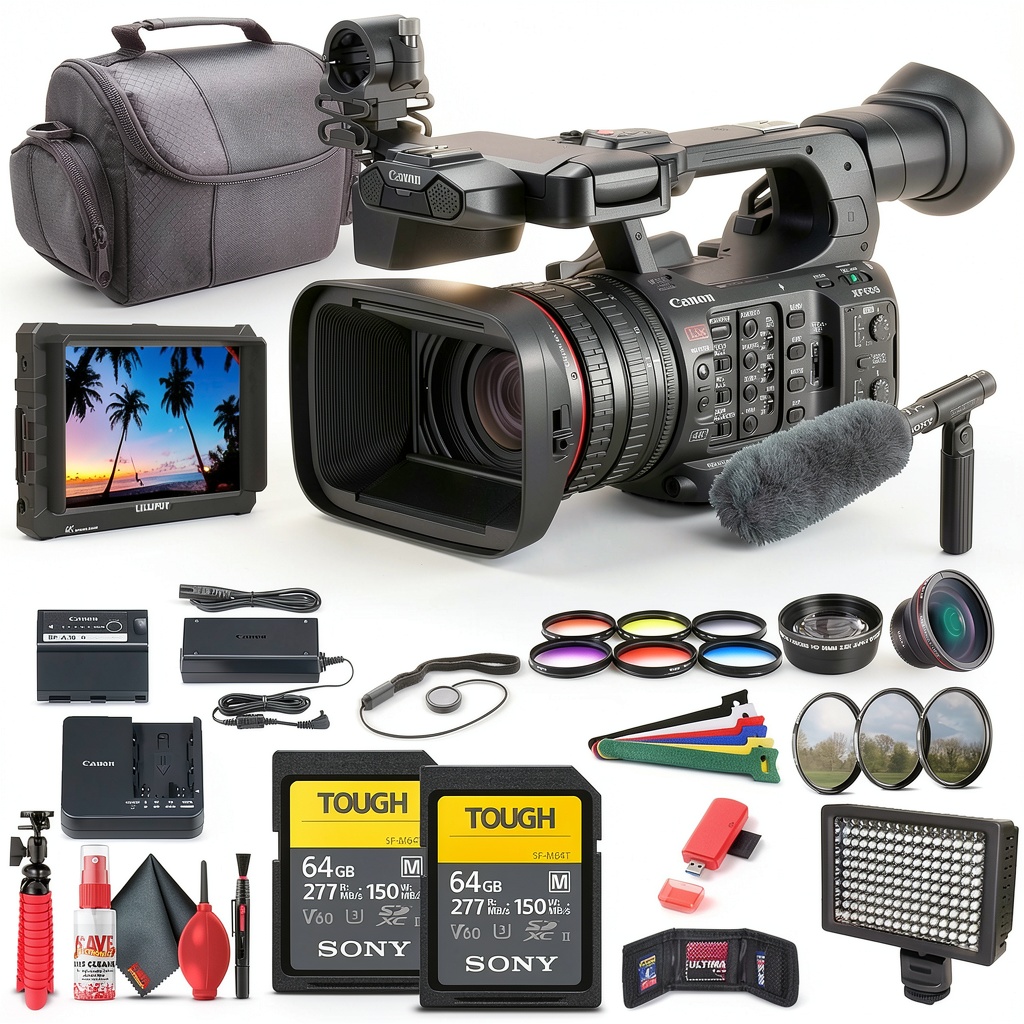
Image Quality & Sensor Performance
The 1-inch sensor strikes a practical balance between light gathering capability and depth of field control. For ENG and sports work, this is actually advantageous—you maintain more focus flexibility than with larger sensors, reducing the risk of missed focus during fast-moving action. The trade-off becomes apparent in low-light situations, where the XF605 begins showing noise around ISO 1600 that requires careful noise reduction in post.
During evening football games under stadium lighting, the camera performed admirably up to ISO 3200, though shadows required careful handling. The dual native ISO functionality helps, but this isn’t a low-light specialist—for that, you’d need cameras with larger sensors or better high-ISO performance.
Canon’s color science remains a standout feature. Skin tones render naturally straight from camera, reducing grading time for projects with quick turnaround requirements. The camera’s auto white balance proves remarkably reliable in mixed lighting, something I verified during transitions between indoor and outdoor shooting at a day-long corporate event.
Audio Capabilities
The four-channel XLR audio inputs provide professional-grade audio capture that most mirrorless cameras can’t match. During a multi-camera live event production, I ran two wireless lavaliers through channels 1-2 while using the built-in stereo mics for ambient sound on channels 3-4—all recording simultaneously with independent level control.
The included ECM-VG1 shotgun microphone offers decent performance for general use, but serious audio professionals will want to upgrade to higher-end options from Sennheiser or Rode. The camera’s audio handling, however, is excellent—clean preamps with minimal noise even at higher gain settings.
Workflow & Connectivity
The dual SD card slots support multiple recording strategies: simultaneous recording for redundancy, relay recording for extended events, or different codecs to each card. For a recent all-day conference, I set one card to record 4K 30p XF-AVC for primary footage while the second captured 1080p MP4 for quick social media edits—a workflow that saved significant time in post-production.
The wireless functionality presents both opportunities and frustrations. While the ability to transfer clips via FTP or control the camera through Canon’s iPhone app sounds convenient in theory, the setup process proves time-consuming. For reliable wireless workflow, you’re better served using the LAN connection with a wired network or dedicated wireless transmitter.
Pros & Cons
Advantages:
- Exceptional zoom range with optical quality maintained throughout the focal range
- Reliable autofocus that handles moving subjects better than most professional camcorders
- Robust build quality that withstands professional use and travel
- Comprehensive professional inputs including 3G-SDI and four-channel XLR audio
- Dual card recording provides crucial redundancy for paid work
- Canon color science delivers natural-looking results with minimal grading
Limitations:
- Premium pricing positions it above many mirrorless alternatives with larger sensors
- Limited low-light performance compared to full-frame competitors
- Wireless functionality requires significant configuration and isn’t as seamless as marketing suggests
- Bundle accessories vary in quality—some components feel aimed at budget-conscious buyers rather than professionals
- No RAW video output limits ultimate image manipulation potential
Comparison & Alternatives
Cheaper Alternative: Sony PXW-Z90
The Sony Z90 offers 4K recording at approximately half the price of the XF605 bundle. Having used both cameras extensively, the Z90 makes sense for budget-conscious productions that still need professional features like XLR inputs and SDI output. However, you sacrifice the XF605’s 10-bit color depth, extensive zoom range, and advanced autofocus. The Z90’s 1-inch sensor performs similarly in good light, but its 8-bit recording limits grading flexibility significantly.
Choose the Z90 if: Your budget is constrained under $3,000, you primarily deliver to platforms where 8-bit color suffices, and you don’t need the extended zoom range for sports or wildlife.
Premium Alternative: Canon XF705
Stepping up to the XF705 brings several meaningful improvements: larger 1.25-inch sensor for better low-light performance, wider 15x zoom range starting at 25.5mm equivalent, and higher-bitrate recording options. The price jump is substantial—approximately $2,000 more than the XF605—but for broadcast professionals working in variable lighting conditions, the improvements justify the cost.
Choose the XF705 if: You regularly work in challenging lighting conditions, need the absolute best image quality from a camcorder-form factor, and have budget flexibility for professional broadcast requirements.
Buying Guide / Who Should Buy
Best For Broadcast Professionals
If you’re working in electronic news gathering or live event production, the XF605 delivers the reliability and image quality needed for broadcast standards. The combination of professional I/O, robust build quality, and Canon’s color science makes it an excellent choice for stations and production companies. The dual card recording provides essential redundancy for paid work where you can’t afford card failures.
Best For Sports Videographers
The 15x optical zoom alone makes the XF605 worth considering for sports applications. Being able to capture wide establishing shots and tight player close-ups from a single position is invaluable when your shooting positions are limited. The advanced autofocus reliably tracks moving athletes, though for fastest-action sports like hockey or basketball, you’ll still want to use manual focus for critical moments.
Best For Documentary & Event Filmmakers
For filmmakers covering events or documentaries where conditions change rapidly, the XF605’s balance of image quality, operational flexibility, and reliability shines. The professional audio inputs allow direct connection to wireless lavaliers and boom mics, while the dual codec recording enables both high-quality masters and quick-turnaround edits from the same device.
Not Recommended For Budget-Conscious Creators
If you’re working with limited funds, the XF605 bundle represents a significant investment that might not provide the best value. Modern mirrorless cameras like the Sony FX3 or Canon C70 offer larger sensors and better low-light performance at similar price points, though they sacrifice the integrated zoom lens and some operational conveniences.
Not Recommended For Cinema Purists
If you’re pursuing cinematic aesthetics with shallow depth of field and maximum grading flexibility, the XF605’s 1-inch sensor and fixed lens design will feel limiting. Cameras like the Blackmagic Pocket Cinema Camera 6K Pro or Sony FX6 provide superior image character and dynamic range for narrative work, though they require additional investment in lenses and accessories.
FAQ
How does the XF605 handle low-light situations compared to full-frame cameras?
The XF605 performs adequately in moderate low-light conditions up to ISO 1600, but shows noticeable noise beyond that point. Full-frame cameras generally maintain cleaner images at higher ISOs, making them better choices for frequently shooting in available light. The XF605’s dual native ISO helps, but it can’t match the light gathering capability of larger sensors.
Is the bundle worth the extra cost over buying the camera separately?
This depends on the accessories you already own. The monitor and microphone included provide basic functionality but aren’t professional-grade. If you’re building a kit from scratch, the bundle offers convenience, but seasoned professionals might prefer selecting higher-quality accessories individually, which could prove more expensive but deliver better long-term value.
How reliable is the wireless functionality for remote control and file transfer?
The wireless features work but require significant setup time and can be temperamental in crowded RF environments. For critical monitoring or control, I recommend using wired connections whenever possible. The FTP transfer functionality proves useful for sending clips from location, but transfer speeds vary considerably based on network conditions.
Can the XF605 replace a traditional mirrorless camera for hybrid shooting?
While the XF605 captures excellent video, its still photography capabilities are limited compared to dedicated hybrid cameras. The fixed lens and smaller sensor also restrict creative flexibility for photographers accustomed to interchangeable lens systems. For dedicated video professionals, it’s superior; for hybrid creators needing both stills and video, a mirrorless system might serve better.
How does the battery life hold up for all-day shooting?
The included BP-A60 battery provides approximately 2.5 hours of continuous 4K recording, though this varies based on use of features like Wi-Fi and monitor brightness. For all-day events, plan on carrying 3-4 batteries or using an external battery solution. The camera’s power management is efficient, but professional shooting days require backup power planning.
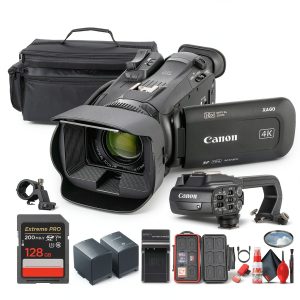 Canon XA60 4K Camcorder Professional UHD Bundle
  GoPro HERO12 Waterproof Action Camera Bundle 5.3K Video
  DJI Osmo Action 5 Pro Adventure Combo Vlogging Camera Bundle
 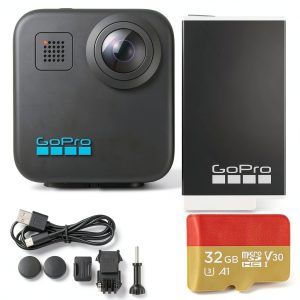 GoPro MAX 360 Action Camera 6K Video Waterproof Adventure
 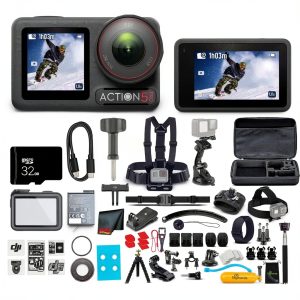 DJI Osmo Action 5 Pro Waterproof Camera Adventure Kit
  TuyuBEE Ceiling Spotlight Color Changing Dimming Remote
 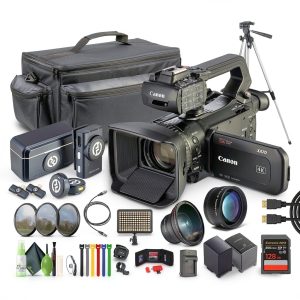 Canon XA70 PAL 4K Camcorder Professional Video Recording
  Wikistore Christmas Color Changing String Lights 300 LED
  Panasonic X1500 4K Camcorder 24x Zoom WiFi Live Streaming
  GoPro HERO11 Black Waterproof Action Camera Bundle
  Canon XA70 PAL 4K Camcorder Professional Video Recording
  PowerHub 10K Wall Charger Built-in Cables High Capacity
  Pavo TV Wall Mount Universal Tilt Swivel Space Saving
  SJCAM C100+ Mini WiFi Action Camera 4K Wearable Body Camera
  GoPro HERO11 Creator Edition Action Camera Bundle 5.3K
  Sony Handycam DCR VX2200E Camcorder Black PAL Professional
  1688商品
  RGB Alarm Clock Color Changing Display Bedroom Decor
  DJI Osmo 360 Adventure Combo Black Action Camera Bundle